
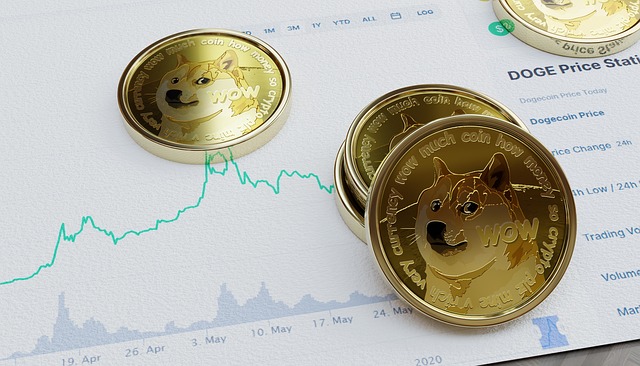
The cryptocurrency market has evolved far beyond Bitcoin, with thousands of alternative digital currencies offering unique features and investment opportunities. These altcoins serve different purposes, from gaming platforms to decentralized finance applications.
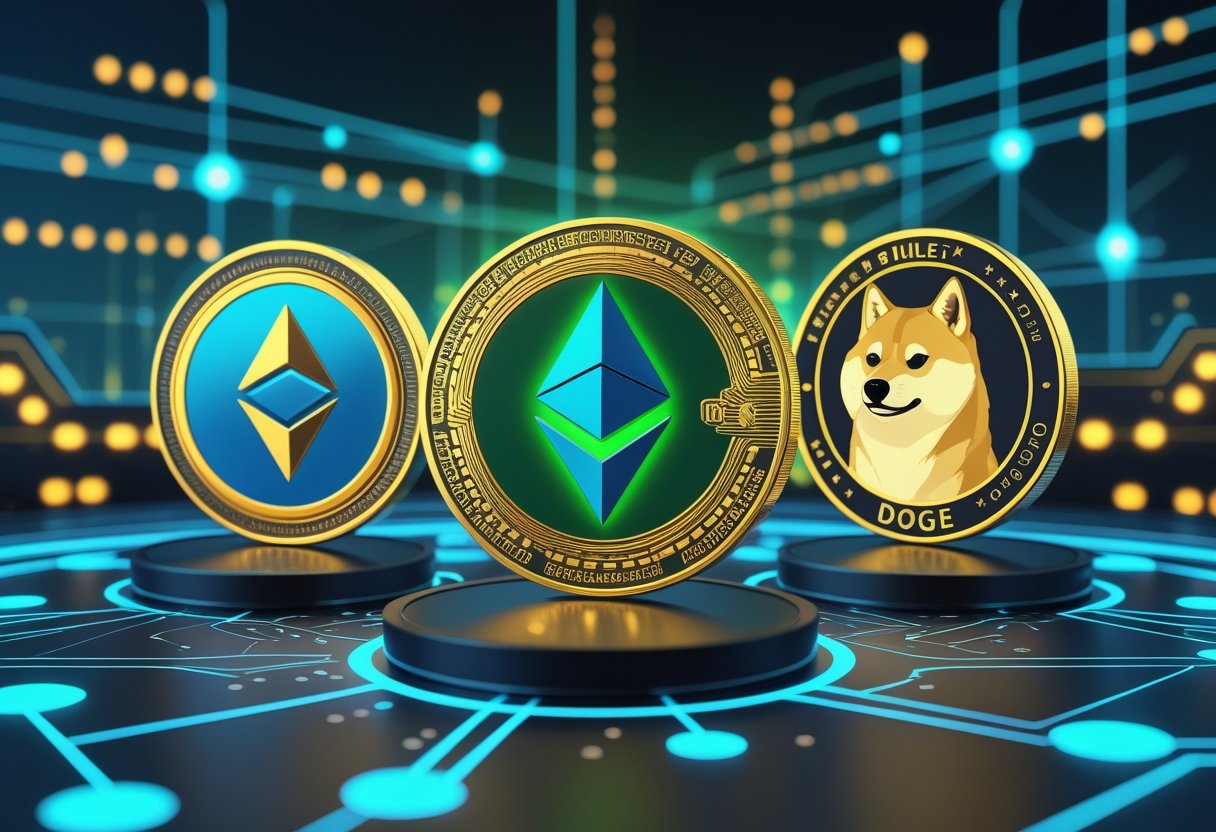
Three standout altcoins that demonstrate this diversity are Immutable X (IMX), Celo (CELO), and Dogecoin (DOGE), each representing different sectors within the crypto ecosystem. IMX focuses on NFT gaming infrastructure, CELO targets financial inclusion, and DOGE operates as a popular meme-based currency.
Understanding these cryptocurrencies requires examining their underlying technology, market performance, and practical applications. Investors must also consider the risks and strategies involved in trading these digital assets effectively.
Understanding Cryptocurrency and Altcoins
Cryptocurrency represents a digital asset system built on blockchain technology that operates independently of traditional banking systems. Alternative coins, or altcoins, encompass all cryptocurrencies beyond Bitcoin and serve distinct purposes within the broader digital economy.
What Is Cryptocurrency?
Cryptocurrency functions as a digital or virtual currency secured by cryptographic protocols. These digital assets exist on decentralized networks, typically blockchain systems, that record all transactions across multiple computers.
Bitcoin emerged in 2009 as the first successful cryptocurrency implementation. It established the foundational principles of peer-to-peer digital transactions without intermediaries.
Key characteristics include:
- Decentralized network operation
- Cryptographic security measures
- Transparent transaction records
- Limited supply mechanisms
- Global accessibility
Most cryptocurrencies operate on blockchain technology. This distributed ledger system maintains transaction records across network participants rather than central authorities.
Miners or validators process transactions and add new blocks to the chain. They receive cryptocurrency rewards for maintaining network security and processing capabilities.
Difference Between Coins and Altcoins
Bitcoin maintains its position as the original cryptocurrency and largest by market capitalization. All other cryptocurrencies fall under the altcoin category, regardless of their specific features or purposes.
Primary distinctions:
| Aspect | Bitcoin | Altcoins |
|---|---|---|
| Launch date | 2009 | 2011 onwards |
| Market position | Dominant | Varied |
| Purpose | Digital currency | Diverse applications |
| Network consensus | Proof of Work | Multiple mechanisms |
Altcoins often introduce technological improvements or serve specialized functions. Some focus on faster transaction speeds, others on smart contract capabilities or specific industry applications.
DOGE began as a meme-based cryptocurrency but gained significant adoption. CELO targets mobile-first financial services in emerging markets. IMX specializes in NFT and gaming applications on Ethereum.
How Altcoins Drive Market Innovation
Altcoins introduce experimental features that expand cryptocurrency capabilities beyond simple value transfer. They test new consensus mechanisms, governance models, and application-specific solutions.
Smart contract platforms like Ethereum enabled programmable blockchain applications. This innovation spawned entire ecosystems of decentralized finance protocols and applications.
Innovation areas include:
- Consensus mechanism improvements
- Scalability solutions
- Privacy enhancements
- Cross-chain interoperability
- Sector-specific applications
Layer 2 solutions address blockchain scalability challenges. These technologies process transactions off the main chain while maintaining security guarantees.
Proof of Stake systems reduce energy consumption compared to Bitcoin’s Proof of Work model. Many newer altcoins implement these more efficient validation methods.
Altcoins also explore governance tokens that give holders voting rights in protocol decisions. This democratic approach to network management represents a significant departure from traditional financial systems.
Exploring Popular Altcoins: IMX, CELO, and DOGE

IMX operates as a Layer 2 scaling solution for NFT gaming, CELO focuses on mobile-first financial inclusion through blockchain technology, and DOGE maintains its position as a community-driven cryptocurrency with strong social media influence.
IMX: Use Cases and Technology
Immutable X (IMX) functions as a Layer 2 scaling solution built specifically for NFTs on Ethereum. The platform uses StarkWare’s StarkEx technology to achieve zero gas fees for NFT transactions.
Key technical features:
- Zero-knowledge rollup technology
- Instant trade confirmation
- Carbon-neutral NFT minting
- Ethereum security inheritance
IMX targets gaming applications where players trade digital assets frequently. Popular games like Gods Unchained and Guild of Guardians operate on the platform.
The protocol handles over 9,000 transactions per second. This throughput supports large-scale gaming ecosystems without network congestion.
IMX tokens serve multiple functions within the ecosystem. Users stake tokens for governance voting and earn rewards from platform fees. Developers must hold IMX tokens to access certain API features.
The platform’s carbon-neutral approach addresses environmental concerns about NFT trading. IMX purchases carbon credits to offset the energy consumption of its operations.
CELO: Blockchain for Social Impact
CELO operates as a mobile-first blockchain platform designed to increase cryptocurrency adoption in developing countries. The network supports stablecoins pegged to local currencies.
Core components:
- cUSD: Dollar-pegged stablecoin
- cEUR: Euro-pegged stablecoin
- CELO: Native governance token
- cREAL: Brazilian real-pegged stablecoin
The platform uses phone numbers as public keys, making cryptocurrency accessible to users without technical knowledge. This approach eliminates complex wallet addresses.
CELO’s proof-of-stake consensus mechanism requires lower energy consumption than Bitcoin. Validators stake CELO tokens to participate in block production.
The network supports decentralized finance applications focused on financial inclusion. Projects like Valora provide mobile wallets for peer-to-peer payments in developing regions.
CELO’s governance system allows token holders to vote on protocol upgrades. The community has approved several proposals for new stablecoins and technical improvements.
DOGE: Origin and Community Influence
Dogecoin emerged in 2013 as a parody cryptocurrency based on the popular “Doge” meme featuring a Shiba Inu dog. Creators Billy Markus and Jackson Palmer intended it as a lighthearted alternative to Bitcoin.
The cryptocurrency uses a proof-of-work consensus mechanism similar to Litecoin. DOGE has no maximum supply cap, with 5 billion new coins minted annually.
Community characteristics:
- Active social media presence
- Charitable fundraising initiatives
- Celebrity endorsements
- Meme-driven marketing
Elon Musk’s Twitter posts significantly impact DOGE’s price movements. His mentions of the cryptocurrency often trigger substantial trading volume increases.
The Dogecoin community has funded various charitable causes, including clean water projects and Olympic team sponsorships. These initiatives demonstrate the community’s philanthropic nature.
DOGE serves primarily as a tipping currency on social media platforms. Users send small amounts to content creators and community members as appreciation tokens.
Despite its humorous origins, DOGE maintains a market capitalization ranking among the top cryptocurrencies. Several major companies now accept DOGE as payment for goods and services.
Investing and Trading Considerations
Successful cryptocurrency investing requires thorough evaluation of technical fundamentals, market conditions, and security protocols. Investors must understand volatility patterns and implement proper storage solutions to protect their digital assets.
Key Factors in Evaluating Altcoins
Technology and Use Case form the foundation of any altcoin evaluation. IMX operates as a Layer 2 scaling solution for NFTs on Ethereum, offering zero gas fees for trading. CELO focuses on mobile-first financial services in emerging markets through its proof-of-stake blockchain.
Adoption Metrics provide concrete evidence of real-world usage. Trading volume, active addresses, and developer activity indicate genuine demand versus speculative interest.
Tokenomics Analysis reveals supply dynamics and inflation rates. DOGE has an unlimited supply with 5 billion new coins minted annually. CELO uses a dual-token system with CELO for governance and cUSD as a stable value transfer medium.
Development Team credibility and track record influence long-term viability. Established teams with proven blockchain experience typically deliver more reliable products than anonymous developers.
Risks and Volatility in the Crypto Market
Price Volatility in cryptocurrencies exceeds traditional assets by significant margins. Daily price swings of 10-30% occur regularly across major altcoins. DOGE experienced a 12,000% increase in 2021 followed by an 85% decline.
Regulatory Uncertainty creates sudden market disruptions. Government announcements about crypto regulations can trigger immediate price movements across all altcoins.
Liquidity Risks affect smaller altcoins more severely than established cryptocurrencies. Lower trading volumes can lead to significant price slippage during large transactions.
Technology Risks include smart contract vulnerabilities, network attacks, and protocol failures. Layer 2 solutions like IMX depend on the security of their underlying blockchains.
Security Best Practices for Crypto Investments
Hardware Wallets provide the highest security level for long-term storage. Ledger and Trezor devices keep private keys offline and away from internet-connected devices.
Multi-Factor Authentication must be enabled on all exchange accounts. SMS-based authentication is vulnerable to SIM swapping attacks. Authenticator apps offer better security.
Private Key Management requires careful backup procedures. Write down seed phrases on paper and store them in multiple secure locations. Never store private keys digitally or share them with others.
Exchange Security varies significantly between platforms. Research exchange security histories, insurance coverage, and regulatory compliance before depositing funds. Keep only trading amounts on exchanges and transfer long-term holdings to personal wallets.